
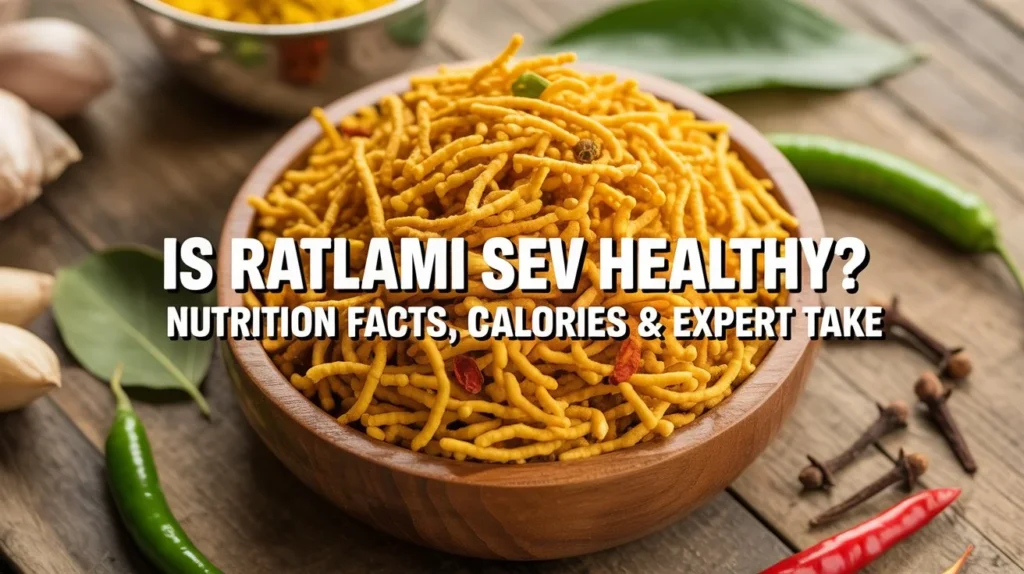
Is Ratlami Sev Healthy? If you’ve ever reached into a bowl of Ratlami Sev and then immediately felt a pang of guilt – you’re not alone. It’s crispy, spicy, deeply satisfying, and everything your snack brain craves. But is it actually healthy?
The honest answer is: it depends on how much you eat and what you compare it to. This article breaks down the complete nutrition profile of Ratlami Sev, compares it to other popular Indian snacks, and gives you a clear, science-backed verdict – without sugarcoating anything and gives you the answer “Is Ratlami Sev Healthy?” We’re using the real nutritional data from our Ratlami Laung Sev (FSSAI certified, lab-tested) so you know exactly what goes into every crunchy bite.
🌶️ Want to taste the real thing first?
Try Ratlam’s Heritage Laung Sev – No MSG, Zero Cholesterol, FSSAI Certified. Pan India delivery from Ratlam, MP.
→ Order now at ratlamsheritage.com/shop
Table of Contents
What Exactly is Ratlami Sev?
Ratlami Sev is a traditional deep-fried snack originating from Ratlam, Madhya Pradesh, India. Unlike regular besan sev found across India, Ratlami Sev is defined by a specific blend of spices, primarily laung (cloves), ajwain (carom seeds), kali mirch (black pepper), and hing (asafoetida), that give it a uniquely bold, aromatic heat that regular sev cannot replicate.
Read this: What Makes Ratlami Sev Special?
It holds a GI (Geographical Indication) tag, meaning authentic Ratlami Sev can only be produced using traditional recipes originating from Ratlam. This is not just a snack; it is a protected culinary heritage product of India. At Ratlam’s Heritage, we make ours from gram flour (besan), groundnut oil, real whole cloves, ajwain, red chilli powder, and iodised salt with no MSG, no artificial colour, and no artificial preservatives.
Ratlami Sev Nutrition Facts (Per 100g & Per Serving)
The data below is from our FSSAI-certified lab testing of Ratlami Laung Sev. Serving size is 20g, which is approximately one small bowl.
| Nutrient | Per 100g | Per Serve (20g) | % RDA/Serve |
| Energy | 616 kcal | 123 kcal | 6.2% |
| Protein | 12.36 g | 2.47 g | 4.6% |
| Carbohydrates | 33.72 g | 6.74 g | — |
| Total Sugar | 1.62 g | 0.32 g | — |
| Total Fat | 47.97 g | 9.59 g | 14.3% |
| Saturated Fat | 24.97 g | 4.99 g | 22.7% |
| Trans Fat | <0.1 g | <0.02 g | 0% |
| Sodium | 1030 mg | 206 mg | 10.3% |
At 123 kcal per 20g serving, Ratlami Sev is comparable to most packaged Indian snacks. The key differentiator is its protein content (2.47g per serve) higher than most namkeen and biscuit-based snacks in the same calorie range.
Is Ratlami Sev Healthy? Breaking It Down
Below are the good and the watch-outs, which let you know “Is Ratlami Sev Healthy?”
The Good: What Works in Ratlami Sev’s Favour
- High Protein for a Snack: At 12.36g protein per 100g, Ratlami Sev delivers more protein than most chips, biscuits, and even many “healthy” snack bars available in India.
- Zero Cholesterol: Made with groundnut oil and 100% vegetarian ingredients, no cholesterol whatsoever.
- Zero Trans Fat: Our Ratlami Sev contains less than 0.1g trans fat per 100g, well within FSSAI safe limits.
- No Added Sugar: Total added sugar is 0g. This makes it suitable for people monitoring sugar intake or following low-sugar diets.
- No MSG: Unlike many packaged snacks, Ratlami Sev contains no monosodium glutamate.
- Ajwain Benefits: Carom seeds (ajwain) in Ratlami Sev have been used in Ayurveda for centuries as a digestive aid. Regular consumption in small quantities is associated with improved digestion and reduced bloating.
- Clove (Laung) Properties: Cloves are rich in antioxidants and have anti-inflammatory properties. Their presence in Ratlami Sev is not just for flavour; it adds functional food value.
- Hing (Asafoetida): Known to aid digestion, reduce gas, and has antimicrobial properties. Ratlami Sev’s distinctive taste comes partly from hing, a functional spice with real health merit.
The Watch-Outs: Where Moderation Matters
- Calorie Density: At 616 kcal per 100g, Ratlami Sev is calorie-dense like all deep-fried snacks. A 50g serving (half a small packet) is approximately 308 kcal, which is significant if you’re managing weight.
- Sodium Content: 1030mg sodium per 100g means a 20g serving contributes 10.3% of the daily recommended sodium intake. If you’re managing hypertension, consume it in small portions.
- Saturated Fat: At 24.97g per 100g, saturated fat is present due to deep-frying in groundnut oil. Keep servings to 20-30g if you’re watching cardiovascular health.
Ratlami Sev vs Other Indian Snacks: Calorie Comparison
| Snack (per 30g) | Calories | Protein | Sugar | MSG? |
| Ratlami Sev (Heritage) | 185 kcal | 3.7g | 0g | No |
| Regular Sev (generic) | 178 kcal | 2.1g | 0g | Often |
| Bhujia (Bikaneri) | 190 kcal | 2.8g | 0.5g | Often |
| Potato Chips (packaged) | 162 kcal | 1.5g | 0.3g | Yes |
| Biscuits (cream) | 148 kcal | 1.4g | 9g | Sometimes |
| Roasted Peanuts | 166 kcal | 7.5g | 0.8g | No |
The comparison is clear: Ratlami Sev is not worse than what you’re already eating. In fact, when compared to cream biscuits, the most common Indian chai-time snack, Ratlami Sev has more protein, zero added sugar, and no MSG. The key is portion control.
Who Should Eat Ratlami Sev (and Who Should Be Careful)
Suitable For:
- Working professionals and students are looking for a protein-containing snack during work or study breaks.
- People who want a flavourful snack without MSG or artificial additives.
- Those following a vegetarian diet, Ratlami Sev is 100% plant-based.
- People with no sugar concerns, zero added sugar, make it safe for most.
Consume in Moderation If You Have:
- Hypertension or kidney disease: sodium content (206mg per 20g serve) should be factored into your daily limit.
- Cardiovascular concerns: Saturated fat from deep frying is present. Stick to one small serving.
- Active weight management goals: the calorie density means portion control is important.
Not Recommended For:
- People with severe gluten sensitivity: our product may contain traces of gluten as declared on the label.
- People with peanut allergy: may contain traces of peanuts as per allergen declaration.
How to Eat Ratlami Sev the Healthy Way
You don’t have to give up Ratlami Sev to eat healthy. You just have to be smart about how you eat it. Here are practical ways to include it in a balanced diet:
- Stick to one serving (20g): One small bowl as a chai-time snack is perfectly fine nutritionally. It is the mindless handful-after-handful eating that adds up.
- Pair it with chai or buttermilk: Both help with digestion and slow down how quickly you consume the sev.
- Use it as a topping, not the main snack: Sprinkle Ratlami Sev on curd, poha, or salad for flavour and crunch without eating 100g at one go.
- Make chaat at home: A small sev puri or bhel with vegetables and yoghurt turns Ratlami Sev into a balanced mini-meal with fibre, probiotics, and crunch.
- Avoid eating directly out of the packet: Portion into a small bowl. You will naturally eat less.
The Expert Take: Our Honest Verdict
“Ratlami Sev is not a health food – and it doesn’t need to be. It is a traditional, heritage snack crafted from real ingredients, with no MSG, no artificial colour, zero cholesterol, and zero added sugar. Compared to the average packaged snack an Indian adult reaches for, Ratlami Sev is arguably the more honest choice. The key, as with all foods, is moderation.”
– Team Ratlam’s Heritage
The spice profile of Ratlami Sev cloves, ajwain, hing, and black pepper is not accidental. These are ingredients that Ayurveda has endorsed for digestive health for centuries. The modern nutritional science broadly agrees: ajwain aids digestion, hing reduces bloating, cloves are antioxidant-rich, and black pepper improves nutrient absorption.
So when you eat Ratlami Sev, you’re not just eating a fried snack. You’re eating a spice-forward food with a genuine functional food dimension that most modern packaged snacks completely lack.
Conclusion: Should You Eat Ratlami Sev?
Yes, in moderation, Ratlami Sev absolutely earns its place in a balanced Indian diet. One 20g serving delivers satisfying crunch, good protein for a snack, zero sugar, zero MSG, and the digestive benefits of traditional spices all at just ₹110 for a 250g pack.
What it is not: a diet food, a low-calorie food, or something you should eat by the 100g handful. Treat it like you would any traditional Indian snack with respect for the recipe and awareness of your portion. At Ratlam’s Heritage, we believe in transparent nutrition. Every batch is FSSAI certified, lab-tested, and made from real ingredients with no hidden additives. What’s on the label is exactly what’s in the packet. So now you have the answer to “Is Ratlami Sev Healthy?”
Ready to try authentic Ratlami Sev?
Order directly from Ratlam, MP. No MSG. No artificial colour. FSSAI Certified.
Laung Sev · Lasan Sev · Mixture | Pan India Delivery | Starting ₹130
Shop Now: ratlamsheritage.com/shop
Our Instagram Handle: instagram.com/ratlamsheritage/
Frequently Asked Questions (FAQs)
Is Ratlami Sev good for weight loss?
Ratlami Sev is calorie-dense (616 kcal per 100g) and is not ideal as a weight-loss food if consumed in large quantities. However, a controlled 20g serving at 123 kcal can be included in a calorie-counted diet without issue. It is significantly better than biscuits or chips in terms of protein-to-calorie ratio.
Is Ratlami Sev Healthy and gluten-free?
Ratlami Sev is primarily made from besan (gram flour), which is naturally gluten-free. However, our production facility may have cross-contamination with gluten. We recommend that people with celiac disease or severe gluten intolerance consult their doctor before consuming.
Can diabetics eat Ratlami Sev?
Ratlami Sev contains zero added sugar. However, it is made from besan, which has a moderate glycaemic index. People with diabetes should consume it in small portions (20g or less) and ideally pair it with a protein or fibre source. Always consult your nutritionist or doctor for personalised dietary advice.
How many calories are in one packet of Ratlami Sev?
Our 200g packet contains approximately 1,232 kcal in total. Our 250g pack contains approximately 1,540 kcal. Recommended serving size is 20g (123 kcal), which is one small bowl.
Is Ratlami Sev better than regular sev?
Nutritionally, they are comparable. What sets Ratlami Sev apart is the spice blend of real cloves, ajwain, and hing, which adds functional health benefits beyond regular besan sev. Ratlami Sev also typically contains no MSG, unlike many mass-produced regular sev brands.
Is Ratlami Sev vegan?
Yes. Ratlami Sev is 100% vegetarian and vegan. It contains no dairy, no eggs, no meat, and no animal-derived ingredients. It carries the green FSSAI vegetarian mark.